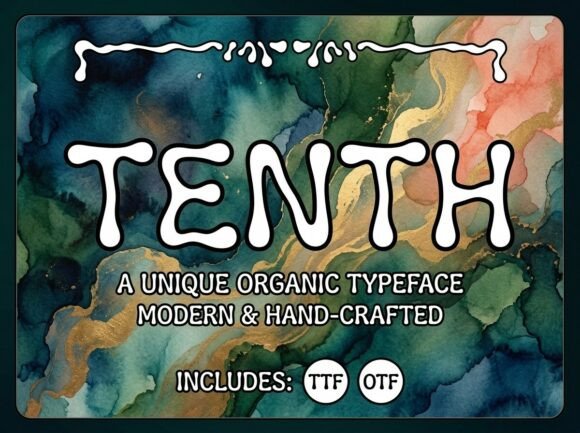
Tenth: A Display Font for Creative Centrality
There I was, staring at a blank brand board, trying to find the right visual anchor for a new artisanal skincare line. The client wanted something that felt both elegant and modern, with a touch of artistry. After testing several options, Tenth emerged as the clear choice. It’s a display font that doesn’t just sit in a layout—it commands it.
Tenth for Logo Design and Brand Identity
Tenth is a premium font that shines when used as a logo or headline. Its strong character and artistic elements make it ideal for brand identity projects where visual impact matters. In a recent project, I tested it on a logo draft for a boutique skincare brand. The font’s bold strokes and subtle flourishes gave the logo a sense of sophistication without feeling too ornate. It worked well alongside a minimalist color palette, adding just enough personality to stand out.
When paired with a serif font like Playfair Display, Tenth created a balanced contrast that felt both professional and creative. The combination worked especially well for product packaging and website headers, where clarity and style are equally important.
Tenth for Packaging Mockups and Product Labels
Testing Tenth on a packaging mockup for a handmade soap line revealed its versatility. The font’s distinct artistic elements made it perfect for product labels, where a little flair can go a long way. On a small label, it maintained legibility while still feeling dynamic. It didn’t overwhelm the design, but it added a sense of craftsmanship that aligned with the brand’s values.
However, I noticed that in very small sizes, some of the finer details got lost. For packaging, it’s best to use Tenth in larger text blocks, such as the main product name or tagline. It’s not the best choice for long body text, but as a decorative display font, it excels in highlighting key information.
Tenth for Web Design and Social Media Graphics
In web design, Tenth works best as a headline or hero section font. I used it on a website header for a local café refresh, and it immediately set the tone for the brand’s aesthetic. The font’s strong character made it easy to read from a distance, which is essential for a homepage hero section.
On social media, Tenth added a unique visual element to Instagram posts and Facebook banners. It worked well as a title font, especially when paired with bold colors or background textures. The font’s artistic elements gave the content a more personal, handcrafted feel—perfect for brands that want to convey authenticity.
Tenth for Business Cards and Print Assets
For business cards, Tenth brought a level of elegance that felt just right for a creative studio or independent designer. The font’s weight and structure made it suitable for both digital and print formats. On a printed card, it stood out without being too flashy, which is exactly what the client wanted.
I also tested it on a flyer for a local event. The font’s visual appeal helped draw attention, and its readability at a glance made it a good fit for short phrases. It wasn’t the best choice for dense paragraphs, but as a decorative display font, it served its purpose well.
Tenth for Editorial and Commercial Design Assets
In editorial design, Tenth worked well as a headline font for a magazine spread. Its strong character and artistic elements gave the layout a cohesive, high-end feel. It paired nicely with a sans serif font for body text, creating a clean and modern look that still felt creative.
For commercial design assets, such as templates or merchandise, Tenth added a unique visual signature. It’s a font that can help differentiate a brand in a crowded market. However, it’s important to consider the context—Tenth may not be the best choice for formal corporate branding, where simplicity and clarity are key.
Before using Tenth in final client work, I always recommend testing it across different platforms and sizes. This helps ensure it performs well in all intended applications. Checking the font’s licensing terms is also crucial, especially if it will be used in commercial projects or print-on-demand products.